
How to Tell If You Need Sliding Glass Door Repair
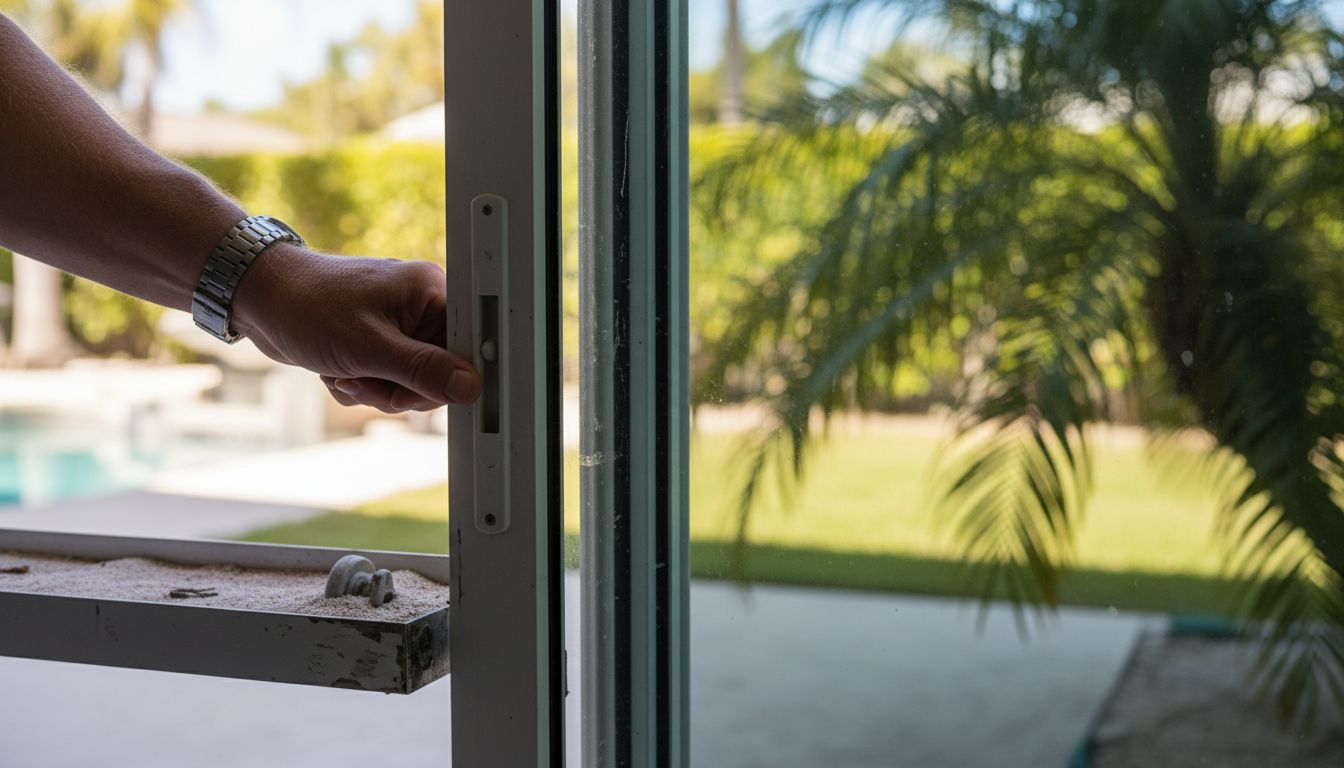
If your sliding glass door takes more than a light push with one or two fingers, something inside it has already worn out - and in most cases that means a repair, not a replacement door. You can confirm it yourself in about ten minutes by checking four things in order: how the panel glides, what the bottom track looks like, whether the lock still lines up, and whether the glass is still sealed. Work through the steps below and you will know what is wrong and what to tell a technician when you call.
- A healthy sliding door glides with two fingers. If you need a shoulder, a hip, or both hands, the rollers are worn or the track is damaged.
- Grinding, crunching, or a door that jumps and drops mid-slide points to rollers and track - the two most common sliding door repairs.
- A lock that only catches when you lift or lean on the panel is an alignment problem, not a bad lock.
- Fog or a milky haze between the panes means a failed glass seal, which cleaning will never fix.
- Cracked glass, a door off its track, or a door that will not lock is a same-day safety issue - stop testing and call.
Before you start: what to have on hand
You need a flashlight, a vacuum or stiff brush, a towel, and a Phillips screwdriver. Clear everything off the track first, including sand, pet hair, and the small pebbles that find their way in from a pool deck or patio. A surprising number of "broken" doors in Broward County are just a track packed with coastal grit, so clean it before you judge it.
1. Run the two-finger glide test
Unlock the door, put two fingers on the handle, and push the panel from fully closed to fully open using only finger pressure. A door in good condition will travel the whole way smoothly at a steady speed. If it stalls, requires your palm, your shoulder, or a two-handed yank, the rollers underneath have flat-spotted or seized. That is the single clearest sign you need sliding glass door repair rather than maintenance.
2. Note exactly where it binds
Slide the door slowly back and forth and pay attention to where the resistance happens. Trouble in one specific spot usually means a dent or flat section in the track at that point. Resistance along the entire run, or a door that gets steadily harder to move the farther it goes, usually means the rollers are worn evenly or the panel has dropped. Write down what you find - "sticks hard about two feet from closed" tells a tech more than "the door is stuck."
3. Inspect the bottom track in raking light
Lay the flashlight on the floor and shine it sideways along the track so the beam skims the surface. This raking light reveals damage you cannot see from above: mushroomed or rolled-over track edges, shiny flat spots where the rollers have been grinding metal on metal, dents, and fine aluminum shavings. Shavings or a visibly flattened track crown mean the damage has moved past the rollers into the track itself, which needs sliding door track repair or a track cap rather than just new wheels. For a complete breakdown of track-specific warning signs, see our guide on 7 signs you need sliding door track repair.
4. Lift and rock the panel
Grip the panel with both hands, try to lift it slightly, then rock it gently toward and away from you. Real movement, a clunk, or a feeling that the door is sitting directly on the track means the rollers have collapsed and are no longer carrying the weight. You can also look for the two small screw holes at the bottom edge of the panel - those are the roller adjusters. If turning them clockwise a few times does not raise the door or improve the glide, the roller assemblies are done and need sliding door roller replacement.
5. Test the lock without helping it
Close the door normally and try to throw the latch without lifting, pulling, or leaning on the panel. If the lock only engages when you muscle the door into position, the panel has sagged out of square - fixing the rollers often brings the latch back into line. If the handle spins loosely, the latch hook does not extend, or the keeper plate in the jamb is chewed up, you are looking at sliding door lock repair. A door that will not lock at all is a security issue, not a nuisance.
6. Check the glass itself
Look at the glass straight on and then at a low angle. A permanent fog, haze, or water staining trapped between the two panes means the insulated seal has failed, and no amount of cleaning will clear it. Also run your fingertip along the edges of the glass where it meets the frame, feeling for chips and for small cracks that start at a corner. Any crack will spread with heat and vibration, so get it addressed before the pane lets go.
7. Look for daylight, drafts, and water
With the door closed and locked, scan the perimeter for visible daylight and run your hand along the meeting stile and the jamb for moving air. In South Florida that gap shows up as an AC bill, humidity, and insects; after a hard rain it shows up as water on the floor inside the track. Crumbling, hardened, or missing weatherstripping and a door that no longer sits flush are repairable alignment and seal problems, not reasons to replace the whole unit.
Quick reference: what your symptom usually means
| What you noticed | Most likely cause | How urgent |
|---|---|---|
| Needs two hands or a shoulder to open | Worn or seized rollers | Repair soon - it is damaging the track |
| Grinding, crunching, metal shavings | Rollers grinding into the track | Repair soon |
| Sticks in one spot only | Dented or flattened track section | Repair soon |
| Lock only catches if you lift the door | Panel out of alignment or bad latch | Prompt - security risk |
| Fog or haze between the panes | Failed insulated glass seal | Plan the repair |
| Cracked glass or door off the track | Structural or glass failure | Same day - stop using the door |
Why coastal doors fail faster here
Salt air, humidity, and windblown sand are hard on sliding doors in Fort Lauderdale, Hollywood, Pompano Beach, Boca Raton, and the rest of the coastal strip. Steel roller bearings corrode, grit acts like grinding paste in the track, and pool decks and sliders see heavy daily traffic. That is why a door that felt fine last season can go from "a little stiff" to "will not move" in a matter of months.
When to call a pro instead
Stop your own testing and call right away if the glass is cracked or shattered, the panel has come off the track or is leaning, the door will not lock, or the door is so heavy that someone could get hurt moving it. Also call rather than keep adjusting if the rollers will not raise the panel, the track is gouged, or the lock has broken inside the stile - forcing a damaged door makes the repair bigger. Replacing rollers means lifting a heavy glass panel out of its frame, which realistically takes two people and the right tools.
Sliding Door Repairs offers 24/7, same-day sliding and patio door service across Broward County and Boca Raton. Tell us what your 10-minute check turned up and we will bring the right rollers, track parts, locks, or glass on the first visit. Call (877) 919-9010 now, or request a visit online to get your sliding door repair scheduled today.
Frequently Asked Questions
Slide the door slowly. Resistance in one specific spot usually means a dented or flattened track at that point, while heaviness along the whole run points to worn rollers. Shine a flashlight sideways along the track: shiny flat areas, rolled-over edges, or metal shavings mean the track is damaged too and both may need attention.
Most problems people assume require a new door - hard sliding, grinding, sticking, a loose handle, a lock that will not catch, torn screens, or damaged weatherstripping - are repairs to the rollers, track, lock, or hardware. Replacement is usually only on the table when the frame itself is bent or badly corroded.
No. Fog, haze, or water staining trapped between the two panes means the insulated glass seal has failed, so the moisture is sealed inside where no cleaner can reach. The fix is replacing the glass unit, not cleaning it.
Treat it as urgent. A door that will not latch leaves your home open, and the usual cause is a sagged panel or a failed latch - both repairable. Sliding Door Repairs offers 24/7 same-day service in Broward County and Boca Raton at (877) 919-9010.
Not long without making it worse. Once rollers flat-spot or seize, the panel grinds directly on the aluminum track and starts deforming it, which turns a roller job into a roller and track job. Get it looked at while it is still just stiff.
Have a question about this? Call (877) 919-9010 or request an estimate.