
7 Signs Your Sliding Door Rollers Are Failing (DIY Test)
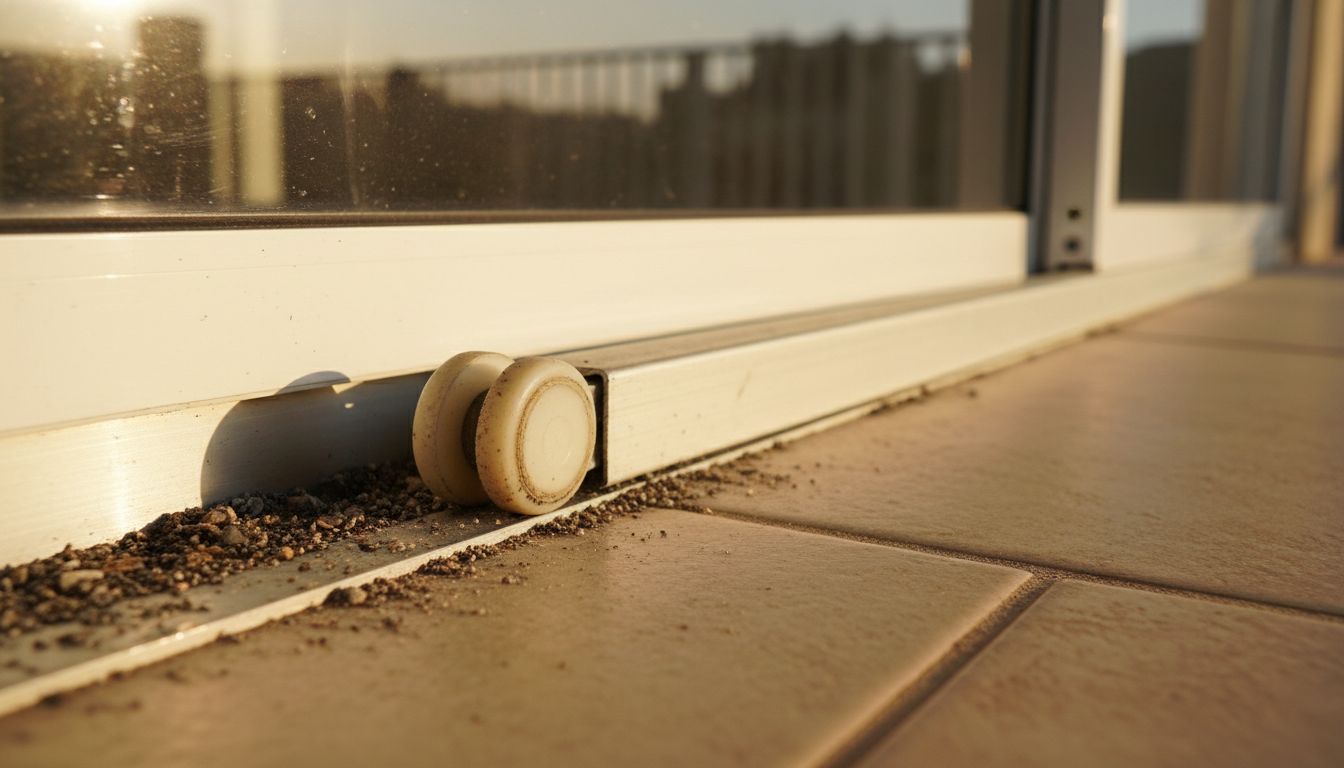
If your sliding glass door has started fighting you, the rollers underneath it are the most likely cause - and there are seven specific signs that tell you the rollers need replacing rather than just a cleaning. Check your own door against the list below as you read. Most of these you can confirm in about five minutes with a flashlight and a screwdriver.
- A healthy sliding door moves with two fingers - needing two hands means the rollers are no longer rolling.
- The clearest test: if the adjustment screws are already run out and the door still drags, the wheels are worn through.
- Grinding, hopping off the track, and a lock that no longer lines up all point at rollers, not the glass.
- If cleaning and lubricating the track changed nothing, you are past maintenance and into replacement.
- Gouged or flattened track usually means the track needs attention along with the rollers.
1. It Takes Two Hands, a Lean, or a Shoulder to Move
A sliding door with good rollers glides with two fingers. Once you are bracing a foot, leaning your weight into it, or lifting the handle to get it started, the wheels have stopped turning and the door is skidding along the track instead. Pay attention to where the drag happens: resistance across the whole opening points at the rollers, while a hard spot in one specific place usually means debris or a dented section of track.
2. You Hear Grinding, Scraping, or a Rumble From the Bottom Edge
Rollers in good shape are almost silent. A metallic grinding noise means the bearing is gone and a steel wheel is riding directly on the track. A rhythmic thump or clunk every foot or so is a flat spot on one wheel striking the same point each rotation, and a continuous scrape that follows the door the entire length of the opening usually means the wheels have collapsed far enough that the bottom rail of the door itself is dragging.
3. The Door Hops, Jumps, or Comes Off the Track
People assume a derailing door is a track problem, but it is far more often the rollers. When wheels collapse or a roller bracket breaks, the door sits too low to stay captured in the channel and pops out under normal use. Stop using a door that is jumping the track - a loose glass panel is heavy and dangerous. If the channel is also crushed or spread open, you are looking at sliding door track repair and realignment alongside new rollers.
4. You Can See the Damage When You Look
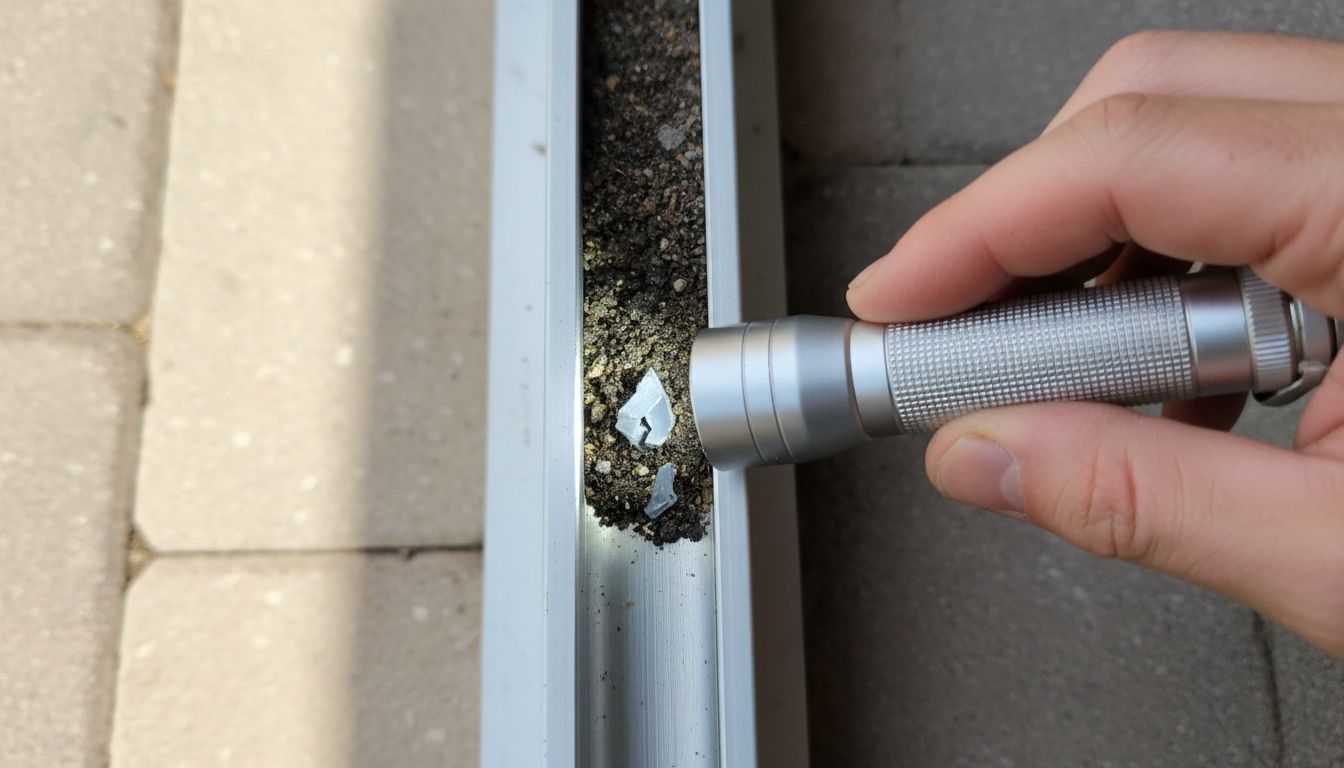
You do not need to pull the door out to get real evidence. Slide the panel to one end, shine a flashlight into the exposed track and along the bottom rail, and look for the following:
- Flat spots, or wheels that will not spin when you nudge them with a screwdriver
- Cracked nylon wheels, or small plastic fragments sitting in the track groove
- Rust and white powdery corrosion - common on coastal Broward doors that see salt air and humidity
- Fine metal shavings or black grit along the channel, which is the track slowly being machined away
- A shiny worn groove or visible gouges in the track, meaning the damage has spread past the rollers
5. Raising the Adjustment Screws No Longer Helps
This is the test that settles the question. Most sliding doors have small adjustment screws at each end of the bottom rail, often hidden behind plastic plugs, and turning them raises or lowers the rollers. If you have already run those screws most of the way out and the door still drags or still sits low, there is no travel left to take up and the wheels themselves are finished. If a screw spins freely with no change at all, the roller housing or bracket is broken.
6. The Door Sits Crooked and the Lock Will Not Line Up
Look at the gap between the door and the frame along the top edge. If it is wider at one end than the other, one roller has failed before the other and that corner has dropped. The usual giveaway is the lock: the latch misses the keeper, or you have to lift and shove the door to get it to catch. A patio door that will not lock properly is a security problem, not just an annoyance, and that is worth handling quickly.
7. You Already Cleaned and Lubricated the Track and Nothing Changed
Proper maintenance is worth trying first: vacuum the channel out, wipe the grit from the groove with a damp cloth, and use a dry silicone spray rather than oil or grease, which both hold dirt. If the door glides better for a day and then goes right back, or never improved at all, you have ruled out the easy fix. At that point roller replacement is the repair that actually solves it.
What to Do With What You Found
Two or three of these signs together almost always means worn rollers. Add gouged or spread track to the picture and both need to be addressed at the same time, or the brand new rollers will wear out early in the same damaged channel.
If your door is sticking, grinding, sagging, or jumping off its track, we can take a look and get it gliding again. Slidingdoorrepairs offers same-day and 24/7 service across Fort Lauderdale, Oakland Park, Plantation, Hollywood, Davie, Sunrise, Pompano Beach, Pembroke Pines, Coral Springs, and Deerfield Beach. Request service at slidingdoorrepairs.com and tell us which signs you spotted - it helps our technicians arrive with the right rollers for your door. Not sure what you are dealing with? Start with our sliding glass door repair page.
Frequently Asked Questions
It is possible, but it is not a light job. The glass panel has to be lifted out of the frame to reach the rollers, and patio door panels are heavy, awkward, and easy to crack or drop. Most people also need the old roller in hand to match the correct replacement, since there are many different roller types. If you are not set up to safely remove and reseat the panel, it is worth having a technician handle it.
It depends far more on conditions than on age. Doors in South Florida take on salt air, humidity, sand, and heavy daily use, all of which corrode bearings and grind the wheels down faster than a door that is rarely opened. Keeping the track clean and free of grit is the single best thing you can do to extend roller life.
Worn rollers alone are a repair, not a replacement. Rollers, tracks, locks, and handles are all serviceable parts, so a door that sticks, grinds, or sags is usually fixable. A new door only enters the conversation when the glass or the frame itself is damaged beyond repair.
Yes, and this is why it pays to act early. Once a wheel stops turning, it skids along the aluminum channel and slowly wears a groove or flattens the rail. Fine metal shavings in the track are a sign that is already happening, and at that point the track may need repair or realignment along with the new rollers.
We offer same-day and 24/7 service across our Broward service areas, including Fort Lauderdale, Plantation, Hollywood, and Pompano Beach. Submit a request at slidingdoorrepairs.com with your location and what the door is doing.
Have a question about this? Call (877) 919-9010 or request an estimate.